New biosensors and applications
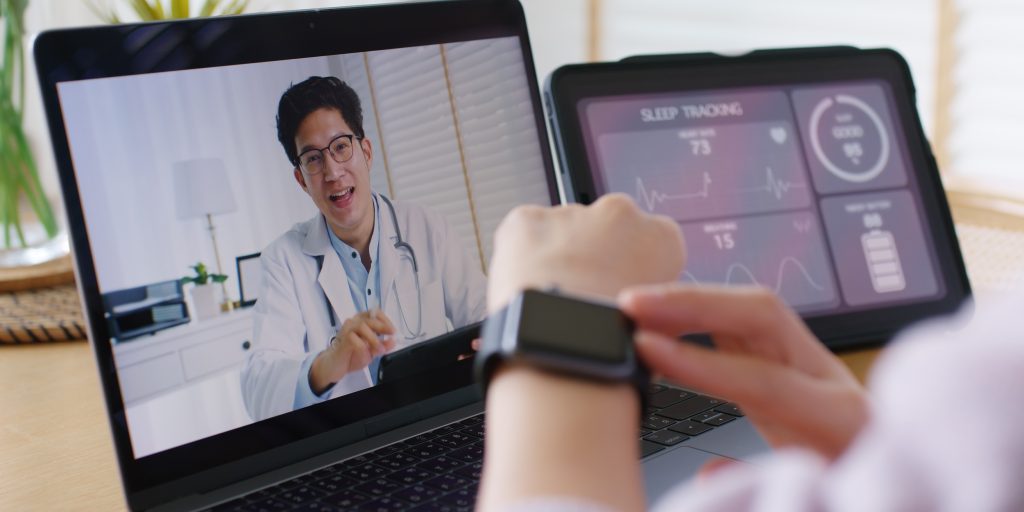
Biosensors continuously track signals from the body in real time. Their ability to convert biological data into digital readouts has revolutionized medicine and wellness. They are used in applications from diabetes management to remote patient monitoring to workout recovery to mental health and lifestyle measurement.
Purdue University researchers are improving biosensor technology and developing new applications for it.
solution 1
Traditional electrochemical sensors work well in laboratory conditions but fall short in real-world applications where they face changing environments and cannot be regularly calibrated.
Researchers have developed self-calibrating electrochemical sensors for wearable or implantable applications. Their configuration decouples environmental changes from analyte measurements. This results in a more accurate, longer lasting, and self-calibrating sensor.
Applications include wearable/implantable technology, water monitoring and treatment, and agriculture.
solution 2
Researchers have developed a method to integrate colorimetric sensors into traditional wound dressings, leading to improved patient outcomes and streamlined care for both clinical and at-home use.
The wound dressings enable real-time and retrospective monitoring of diverse wound conditions (pH, temperature, moisture levels) to provide insights for wound management. The scalable roll-to-roll production method is compatible with various commercially available fabric substrates ensuring an adaptable, cost-effective solution.
In situ testing on a 14-day mouse wound model demonstrated the technology’s ability to detect early signs of infection. The biocompatibility of the dressing was evaluated with an assay, showing cell viability that remained above 80% throughout.

solution 3
Researchers are developing an AI-powered wearable device to detect and treat anaphylaxis, a potentially life-threatening allergic reaction that occurs rapidly after exposure to an allergen.
Its flexible CMOS electronics, microfluidics, and energy-efficient designs aim to overcome challenges of traditional anaphylaxis treatment: cost, comfort, accessibility, and timely intervention. The research also emphasizes manufacturability, security, and scalability.
The device was validated through sensor optimization, AI-driven decision-making, and automated drug delivery testing. Its functionality, reliability, and safety were assessed through real-world simulations, industry collaboration, and a figure-of-merit evaluation to optimize scalability and affordability.
solution 4
Researchers are developing an ingestible sensing platform to help pharmaceutical developers identify formulation failures earlier and optimize targeted or controlled-release products with fewer indirect assumptions.
Pharmaceutical formulation teams lack a direct way to verify where and when oral dosage coatings dissolve in a living gastrointestinal (GI) tract. The Purdue platform shifts evaluation from indirect imaging and systemic biomarkers to real-time, material-focused monitoring during GI transit.
An integrated prototype has been demonstrated in laboratory models and biologically derived GI fluids, with sensor trends aligning with independent chemical measurements of segment-specific drug release.
Industry partners interested in developing or commercializing the innovations should contact Jacob Brejcha-Yel, Licensing Associate, Physical Science, JJBrejcha-Yel@prf.org.