For decades, the semiconductor industry has been defined by a handful of global centers of innovation. Today, that map is changing.
From artificial intelligence and advanced manufacturing to national security and quantum computing, every important technological breakthrough of the coming decades will depend on semiconductors. The question facing the industry is no longer where chips are made today, but where the next generation of innovation, talent, and investment will take root.
Through deepening partnerships with Taiwan’s semiconductor leaders, Purdue Research Foundation and Purdue University are building the relationships, research capabilities, and workforce pipelines needed to shape the industry’s future. As global companies look for their next foothold in the United States, Purdue is positioning Indiana as the next big confluence of industry and talent.
It is a pivotal moment for the global semiconductor industry as companies face ever-increasing competition for talent and market share. While Taiwan remains the epicenter of semiconductor manufacturing, the next chapter of growth for the industry will include Indiana.
This momentum is fueled by PRF, which plays a pivotal facilitator role in convening global industry leaders, world-class faculty, and purpose-built environments to tackle one of the nation’s most pressing challenges. As the U.S. accelerates efforts to reshore semiconductor manufacturing and secure its technological future, PRF is laying the groundwork and forming the connections that makes this possible.
PARTNERSHIPS DRIVING INNOVATION
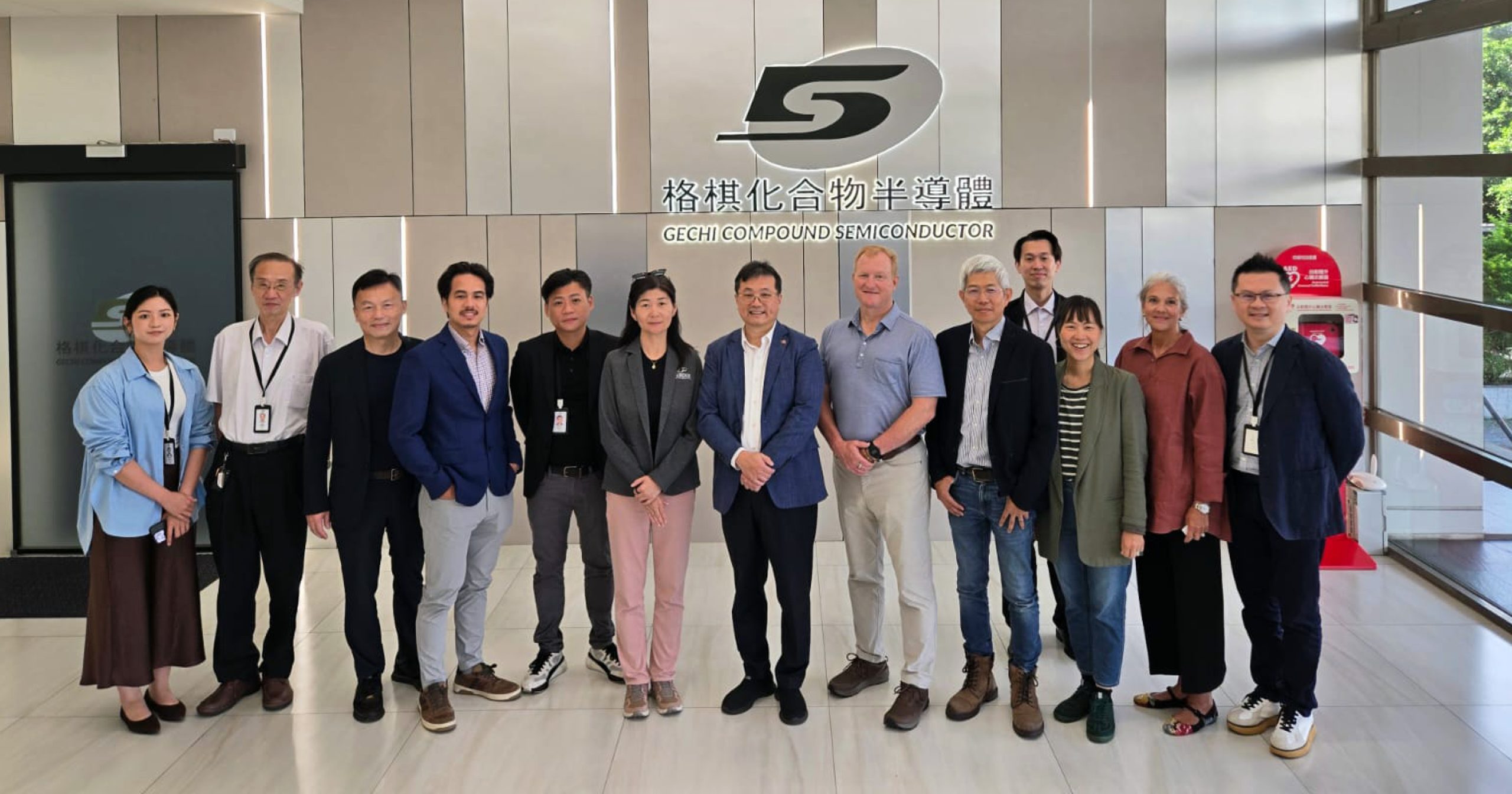
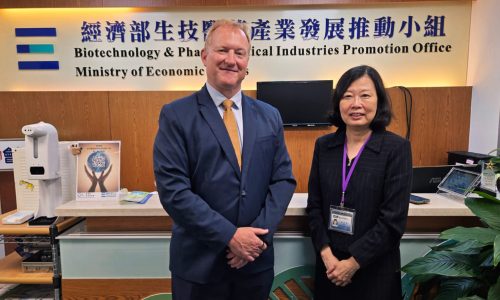
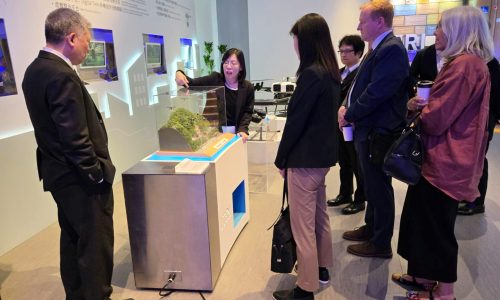
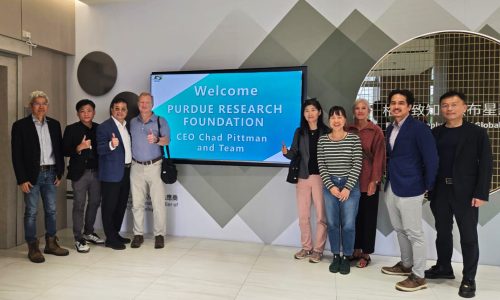
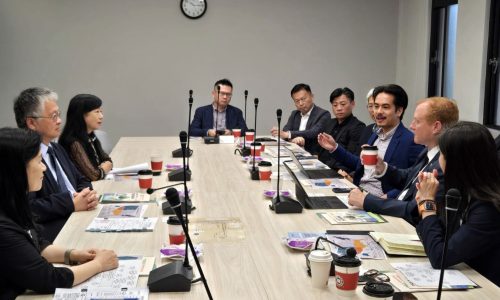
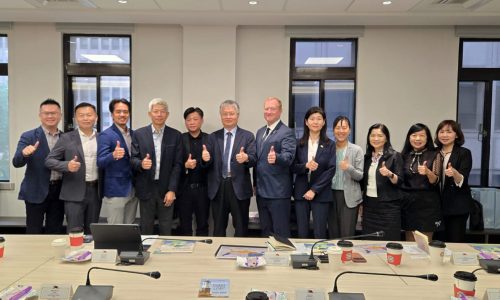
PRF and Purdue University leaders visited the Taiwanese Ministry of Education, the Ministry of Economic Affairs, and leaders from GeChi Compound Semiconductor, which specializes in advanced silicon carbide crystal growth. The discussions focused on presenting Purdue-crafted solutions for industry, including AI and next-generation chip technologies to cultivating talent and strengthening the partnerships needed to build a globally connected innovation ecosystem between Taiwan and the U.S.
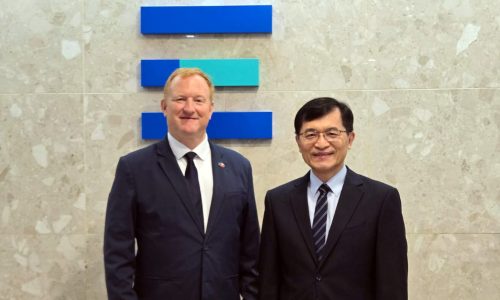
During a meeting with the delegation, Deputy Minister of Economic Affairs Ho Chin-Tsang stated that Taiwan and the U.S. have already established an important foundation for industrial cooperation and that the Purdue Research Park of West Lafayette offers a potential gateway for Taiwanese companies seeking to establish or expand their U.S. presence.
This assurance emerges from Purdue’s long-standing relationship with Taiwan including millions in research awards from Taiwanese sponsors since 2020.
“Our delegations abroad aim to solidify one message: if companies are looking for a place to build their future in the United States, Purdue and Indiana are ready,” said PRF CEO & President Chad Pittman. “PRF has spent decades creating the resources and partnerships that international companies need to be successful. As we look to the future, we’re building on that legacy to shape the next era of innovation and positioning Indiana as the easiest place in America for innovative companies to land and succeed.”
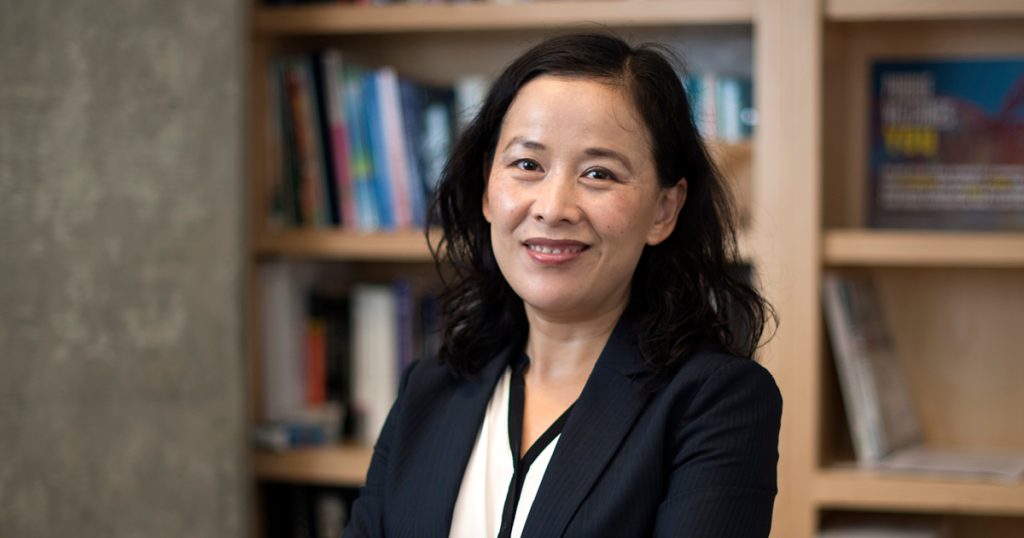
Purdue’s commitment to Taiwan is a strategic, long-term investment in one of the world’s most important innovation and semiconductor ecosystems. To better foster this relationship, PRF welcomed Ting-Yu Hsieh as a partnership development specialist and primary point of contact in Taiwan. She works to facilitate introductions, identify collaboration opportunities, and connect companies, universities, alumni, and partners with Purdue’s innovation ecosystem. As a local resource and bridge between Purdue and Taiwanese partners, she is helping deepen connections that have already fueled more than 70 years of collaboration.
World-class innovation. Midwest advantage.
Purdue isn’t just offering graduates, it has emerged as a national leader in semiconductor education, workforce development, and research. Robust programming and institution support cultivate a highly skilled talent pipeline for the semiconductor workforce and drives emerging research.
That comprehensive approach echoes throughout discussions with industry leaders around the world.
“The future of the semiconductor industry will be built through partnerships,” said Dan DeLaurentis, Purdue’s executive vice president for research. “The strongest semiconductor ecosystems are built on trusted, long-term collaborations. Through Purdue’s partnerships in Taiwan and around the world, we’re creating new pathways for research, talent development, and technology commercialization that will help shape the future of this critical industry.”
PARTNERSHIPS DRIVING INNOVATION

The Midwest is rising. Purdue is leading.
Much of Taiwan’s U.S. presence has so far been concentrated in Texas and Arizona but, increasingly, companies are looking beyond traditional hubs. Indiana offers a compelling alternative: a lower cost of living, access to land for construction, and one of the nation’s strongest engineering talent pipelines.
“We are not just participating, we are leading,” said Mark Lundstrom, the John A. Edwardson Dean of the College of Engineering, chief semiconductor officer, and the Don and Carol Scifres Distinguished Professor of Electrical and Computer Engineering. “Purdue has become ‘America’s Semiconductor University’ by aligning our research, education, and partnerships with national priorities. That means a growing set of industry-university research partnerships, expanding degree programs, launching certificate pathways, and creating hands-on lab experiences that prepare students for careers in chip design, fabrication, packaging, and materials science.”
Through strategic collaborations with leading industry players like imec, MediaTek, SK hynix, and TSMC, Purdue is demonstrating the broader industry shift toward the Midwest is already underway.
Boilermaker delegations abroad reinforce a simple reality: as the semiconductor industry searches for its next American growth center, Indiana — and Purdue in particular — is ready to welcome it with open arms. With a complete ecosystem thoughtfully designed to make access to the U.S. seamless, Purdue is positioning the Midwest as the industry’s next great center for semiconductor innovation.
Media contact: Kelly Nicholl, khnicholl@prf.org; Alicia South-Hurt, absouth-hurt@prf.org
Writer: Polly Barks
About Purdue Research Foundation
Purdue Research Foundation is a private, nonprofit foundation created to advance the mission of Purdue University. Established in 1930, the foundation accepts gifts; administers trusts; funds scholarships and grants; acquires and sells property; protects and licenses Purdue’s intellectual property; and supports creating Purdue-connected startups on behalf of Purdue. The foundation operates Purdue Innovates, which includes the Office of Technology Commercialization, Incubator and Ventures. The foundation manages Purdue Research Park, Discovery Park District, Purdue Technology Centers and Purdue for Life Foundation.
For more information on licensing a Purdue innovation, contact the Office of Technology Commercialization at otcip@prf.org. For more information about involvement and investment opportunities in startups based on a Purdue innovation, contact Purdue Innovates at purdueinnovates@prf.org.