This article has been translated by Google Translate. To read the original article, click here.
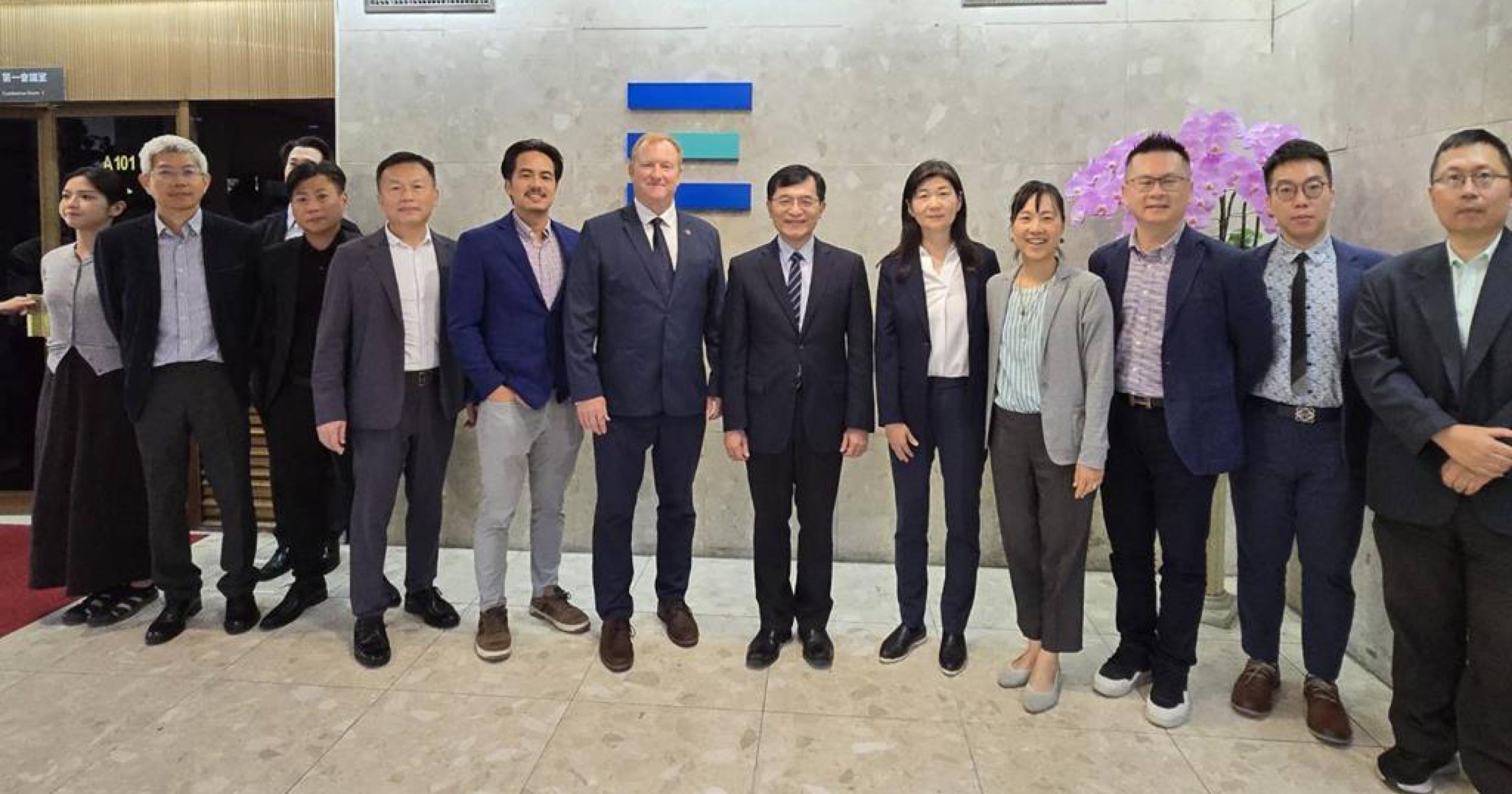
To deepen Taiwan-US cooperation in science and technology, talent and industry, a delegation from Purdue University visited the Ministry of Education and the Ministry of Economic Affairs on June 17 and had in-depth exchanges with GeChi Compound Semiconductor on issues such as third-generation semiconductors, artificial intelligence (AI), high-power devices, talent cultivation and industry cooperation, and jointly explored the establishment of a Taiwan-US science and technology innovation ecosystem and industry cooperation platform.
Taiwan and the United States have already established an important foundation for industrial cooperation. In addition to Arizona and Texas potentially becoming semiconductor hubs, the Ministry of Economic Affairs believes that Purdue Research Park in Indiana can be assessed as an important cooperation base for Taiwanese companies to develop in the United States.
Purdue University has long been a leading center for engineering and technology education in the United States, with over 1,000 Taiwanese students having graduated from it. Purdue University stated its desire to further deepen cooperation with the Taiwanese government, academia, and industry to jointly promote technological innovation, talent development, and industrial growth. Purdue alumni are found throughout the global technology industry, including distinguished figures such as Neil Armstrong, the first human to walk on the moon, demonstrating its profound technological and innovative capabilities.
During a meeting with the delegation, Deputy Minister of Education Liu Kuo-wei stated that in the face of the rapid development of the global AI and semiconductor industries, highly skilled technical personnel have become a crucial foundation for national competitiveness. The Ministry of Education welcomes Purdue University’s deepening cooperation with Taiwanese businesses and academia, cultivating a new generation of talent with a global perspective and practical abilities through student exchanges, joint research, industry-academia collaboration, and international internships, thereby further strengthening educational and technological cooperation between Taiwan and the United States.
Deputy Minister of Economic Affairs Ho Chin-Tsang stated that the global semiconductor supply chain is entering a new phase of international expansion, with third-generation semiconductors, high-voltage power devices, and AI applications being key future development directions. The Ministry of Economic Affairs welcomes the collaboration between Purdue University and Gigabyte Compound Semiconductor and suggests combining resources from the Industrial Technology Research Institute (ITRI) and related industry platforms to establish a complete technology ecosystem from materials and components to system applications, accelerating technology commercialization and industrial implementation.
Ho Chin-Tsang further pointed out that Taiwan and the United States have already established an important foundation for industrial cooperation. In addition to Arizona and Texas, Purdue Research Park in Indiana can also be considered as an important cooperation base for Taiwanese companies to develop in the United States. In the future, if more information can be provided on land, water and electricity, factory buildings and investment environment, it will help Taiwanese companies evaluate their plans to invest in the United States and deepen Taiwan-US two-way investment and technological cooperation.
Both the Ministry of Education and the Ministry of Economic Affairs stated at the meeting that, facing the rapid development of the global AI, semiconductor, and advanced manufacturing industries, Taiwan must continue to strengthen its international connections and industrial competitiveness. The government welcomes Purdue University and Gekko Compound Semiconductor’s efforts to promote Taiwan-US technological cooperation and will continue to assist companies in enhancing their technological capabilities and expanding into international markets through talent cultivation, industry-academia collaboration, R&D resource integration, and industrial policy support, jointly promoting Taiwan’s industrial upgrading and innovative development.
The two ministries also stated that they will continue to play the role of platform and bridge in the future, assisting domestic enterprises in connecting with international research institutions and industrial resources, promoting in-depth cooperation between Taiwan and the United States in terms of talent, technology, capital and markets, and further enhancing Taiwan’s strategic position in the global technology industry supply chain.
Chad Pittman, CEO of the Purdue Research Foundation (PRF), stated that Purdue Research Park has been developing for over 75 years, possessing complete infrastructure, ample water and electricity resources, and a mature single-window service mechanism. It has already attracted numerous international companies, including SK hynix, MediaTek, Rolls-Royce, and others. The foundation hopes to become an important platform for Taiwanese companies entering the US market, assisting them in quickly completing investment and factory setup plans.
Purdue University Vice President Luna Lu stated that in addition to technological cooperation, the university will actively promote talent exchange, student training, and corporate cooperation programs to help Taiwanese students and business talents access opportunities in the development of the US technology industry and further promote innovation and entrepreneurship cooperation between the two sides.
Lai Po-Fan, General Manager of GCL Compound Semiconductor, stated that GCL has signed a Memorandum of Understanding (MOU) with Purdue University, officially launching third-generation semiconductor cooperation and exchange. In the future, both parties will focus on areas such as silicon carbide (SiC), high-voltage power devices, AI thermal management, and next-generation power electronics technologies. Combining Purdue University’s strong foundation in MOSFET, IGBT, and high-voltage device R&D with GCL’s capabilities in silicon carbide materials, wafer fabrication, and thermal management technologies, they will jointly drive innovation in next-generation key technologies. Lai Po-fan stated that Purdue University has achieved significant results in its research on 6,000V to 10,000V high-voltage power devices, and a stable and high-quality materials supply chain is one of the keys to the future development of high-voltage devices. GQ hopes to become a key partner in high-end silicon carbide materials and wafers through cooperation with Purdue University, jointly promoting breakthroughs in high-power device technology.
Kuan-Ming Hsiung, Chairman of GeChi Compound Semiconductor, stated that we are currently at a crucial juncture for global development in AI, third-generation semiconductors, and energy transformation. Taiwan possesses world-class semiconductor manufacturing capabilities, while the United States boasts top-tier research and innovation resources. This collaboration with Purdue University is not only a partnership between a company and a university but also a significant starting point for technological, talent, and industrial cooperation between Taiwan and the United States.
Hsiung Kuan-ming stated that he hopes to collaborate with the Taiwanese government, Purdue University, relevant research institutions, and industry partners to jointly establish a transnational innovation ecosystem, promoting the development of key technologies such as third-generation semiconductors, AI, high-power components, and thermal management. Simultaneously, through the Purdue Research Park platform, he aims to assist more Taiwanese companies in connecting with the US market, leveraging US technology services, market expansion, and R&D cooperation to drive mass production in Taiwan, thus forming a new cooperative model of mutual complementarity and win-win collaboration between Taiwan and the US.
Sources familiar with the matter said that silicon carbide is an important material for the future third-generation semiconductors. It has functions such as heat dissipation, power saving, energy conservation and energy storage, and is an important material for the next generation of semiconductors in Taiwan, with great development potential.