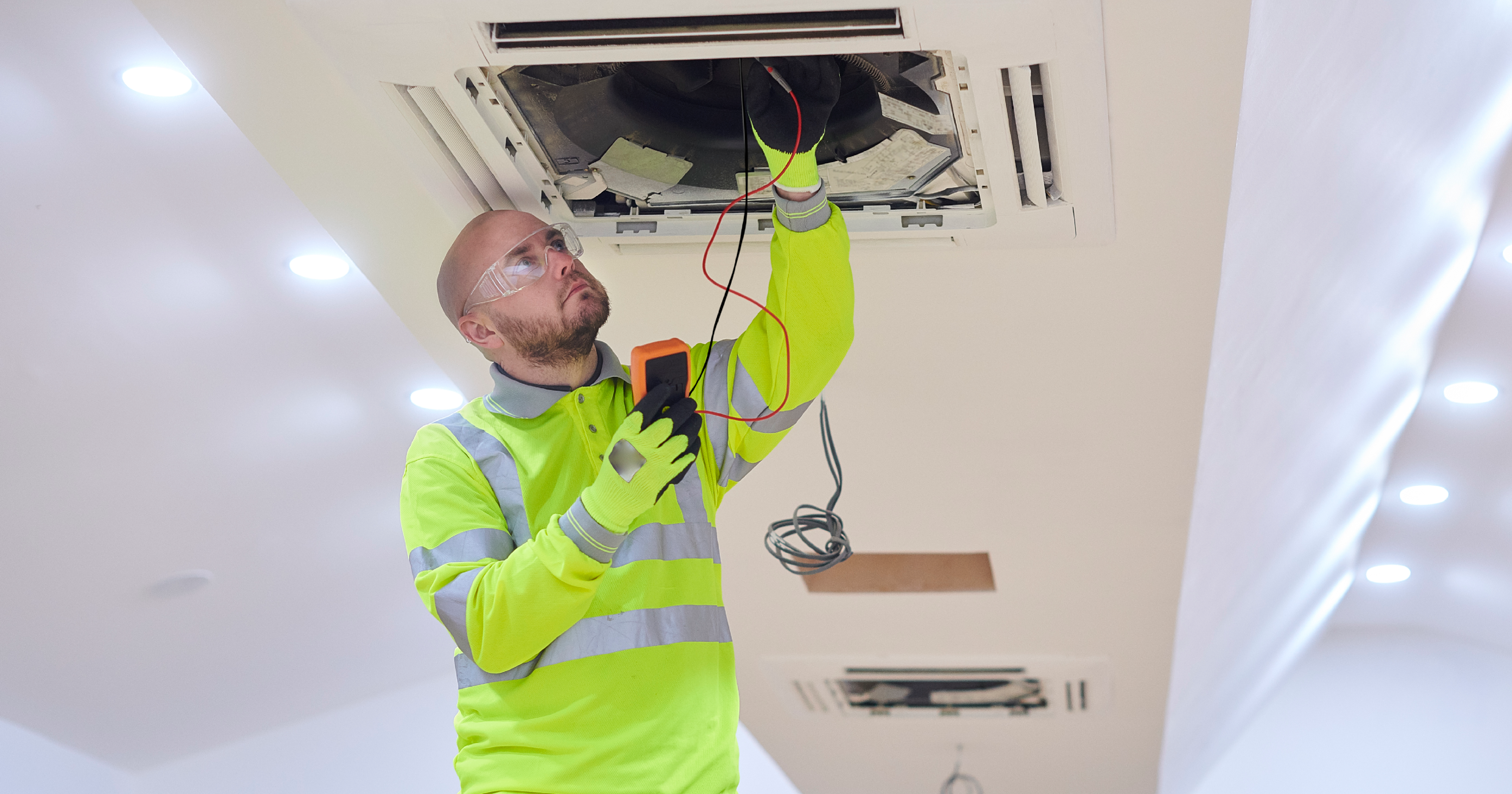
Traditional fiber filters that capture airborne contaminants require HVAC systems to consume a lot of power. Purdue researchers have improved the effectiveness of fiber filters by developing a system using acoustic waves.
Small airborne contaminants like bacteria, viruses, and inhalable solids are detrimental to health and quality of life. Traditional fiber filters in an HVAC system capture these particles, but they produce drops in air pressure, requiring greater power consumption.
Purdue University researchers have developed a system that uses acoustic standing waves to improve the effectiveness of fiber filters for airborne contaminants as much as 1-2 orders of magnitude. The system augments the performance of common, low-pressure filters, reduces HVAC power consumption, and eliminates hazardous byproducts. It is applicable for HVAC systems in industrial and residential buildings.
David Warsinger, College of Engineering
Email: otcip@prf.org
Email: Steve Martin // sgmartin@prf.org