Strengthening ECL emissions and applications
Electrochemiluminescence, or ECL, is a technique in which electrical energy is applied to a system and transformed into chemical energy, which then decays to emit light.
Purdue researchers have developed three patent-pending methods that improve the length and directions of emissions by orders of magnitude and hone their applications in bioimaging.
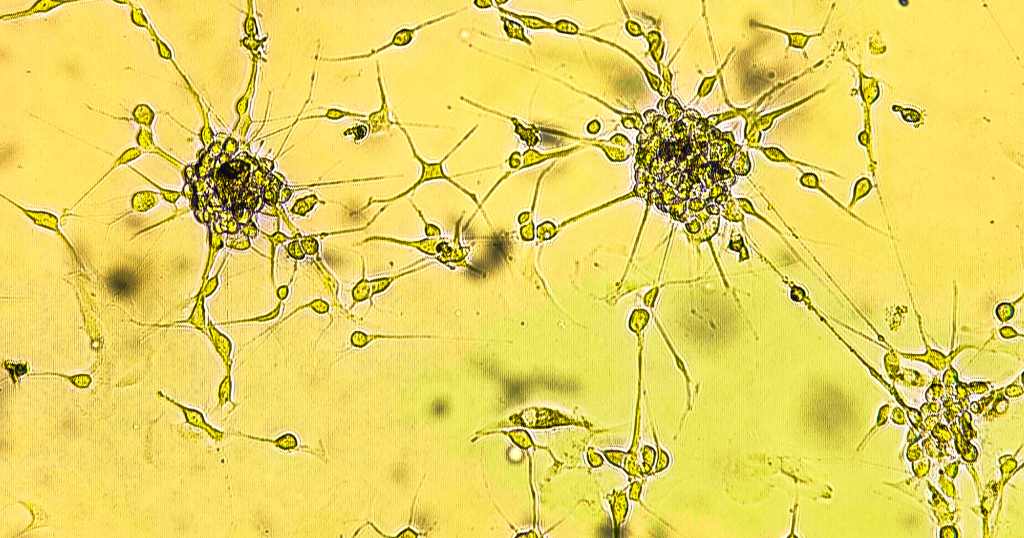
Label-free method to image cancer spheroids
Researchers have developed a label-free method for long-duration imaging of cancer spheroids. It enables sustained ECL emission longer than three hours and sharper spatial resolution. These eliminate the need for fluorescent tags and avoid phototoxicity.
The method could streamline drug screening and tumor biology studies in pharma R&D, CROs, and academic labs by enabling continuous, non-destructive imaging in physiologically relevant 3D models.
Technology Validation:
Proof-of-concept was demonstrated with breast cancer spheroids in controlled lab settings. Along with longer imaging, the innovation preserves sample integrity and integrates with standard electrochemical and imaging equipment.
Method to increase ECL brightness, length
Researchers have developed a method to increase the lifetime of ECL by orders of magnitude. Applications include bio-sensing, polymer synthesis, reaction confinement, and printable electronics.
The Purdue method increases the brightness and length of electroless chemiluminescence after the potential difference is ceased. This paves a path forward for tuning these systems with solution-phase chemistry.
Technology Validation:
Researchers demonstrated the method by employing the co-electroprecipitation of two reactants during the simultaneous electro-reduction of these reactants. The electrode generated a concentration profile exceeding the solubility of the given reactants, promoting precipitant formation. After the leads were disconnected, the precipitant electrolessly chemiluminesced for minutes during dissolution.
System to improve ECL duration, density
Researchers have developed an electrochemical system that releases light for more than a minute, an improvement upon the microsecond range from current technologies. It also expands light production into three dimensions, which has the potential for much higher light-emission density per unit volume.
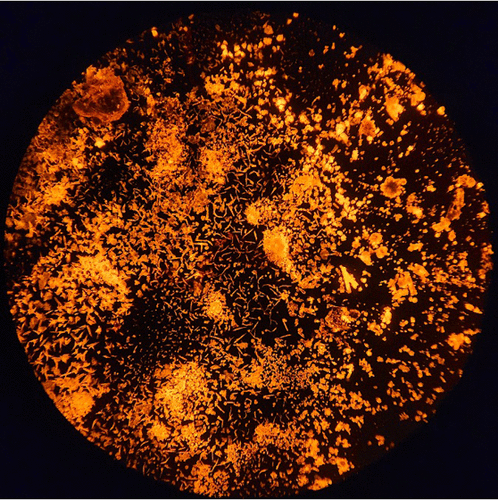
In the Purdue system, Ruthenium II tris(bipyridine) and other co-reactants induce crystal formation starting from the electrode surface. As crystals grow, photons are released. Once the voltage is cut, the crystals dissolve back into the solution, providing a glow lasting longer than a minute depending on experimental conditions.
Technology Validation:
Researchers verified crystal growth from the electrode surface via a microscope in real time, reaching a maximum of ~170 micrometers from the surface. The increase in luminescent lifetime was observed by applying a potential for 100 seconds, ceasing the potential, and measuring the intensity of light released from the solution over time. The researchers observed a total luminescent lifetime of 63 seconds.
related publications
Electroprecipitating the Sulfate Radical Anion Amplifies Electrochemiluminescence in Space and Time
Industry partners interested in developing or commercializing the innovations should contact Jacob Brejcha, Licensing Associate – Physical Science, jjbrejcha@prf.org.