Tactile Engineering, a Purdue-connected company, will collaborate with the Indianapolis Motor Speedway for a more accessible Indianapolis 500.
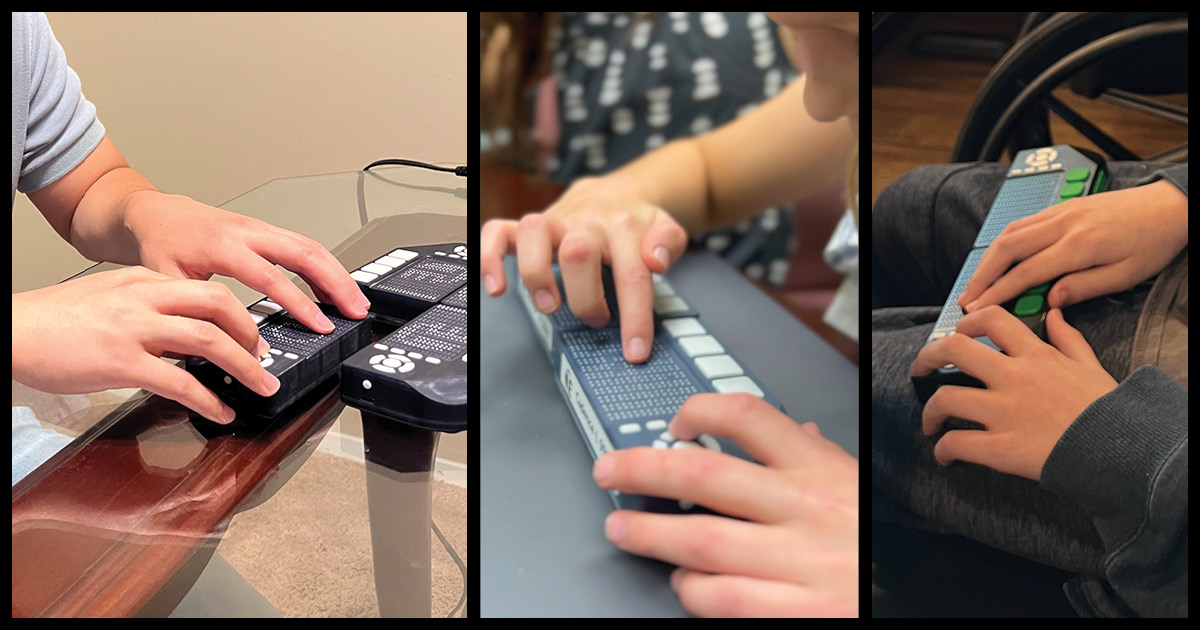
Most of us take for granted the sheer number of screens in front of us nearly every moment we’re awake. But for the three percent of the U.S. population who are severely visually impaired, the lack of screen access is a stark barrier that can often seem insurmountable. But now a Purdue-connected company has created a handheld device which allows readers to access up to eight lines of electronic Braille cells — and nearly limitless opportunities to visualize and connect with the world around them.
The Cadence tablet, developed by Tactile Engineering, has far reaching implications, which becomes clear as CEO Dave Schleppenbach leads you through the company’s Lafayette-based manufacturing facility. The space is lined with photos of individuals who have benefitted from using the tablet.
One image shows a young girl playing a game of virtual table tennis with her sister for the first time. Another pictures an Airbus aerospace engineer who can now feel and update his drawings in real time during a Zoom meeting. Further down the hall, an image of a woman who lost her vision as a teen continues her work as a web developer by pairing the Adobe suite with her tablet.
You may even recognize one of its oldest test users: Stevie Wonder.
The upcoming Indianapolis 500 is one of the more unique ways the tablet makes life more accessible. During the race, fans will be able to listen to expert commentary on the race and feel the position and movement of the cars in real-time. Each car will have full telemetry data available in tactile format and audio, giving driver, team, speed and other critical data to the fan at their fingertips. Several blind Purdue alumni will be attending the race and feeling the race live on the Cadence.
Highlights from the race will be broadcast later via the Blind and Beyond radio show, a non-profit partner of Tactile Engineering.
“The Cadence tablet is about bringing people together. It’s a way for the blind, visually impaired or those with sensory or processing disorders to communicate and participate,” said Schleppenbach. “It’s hard for them to take part in a screen-filled world and that digital divide can be extremely isolating. Our tablet can be used in so many different ways, but the important thing is the connectivity and community it offers.”
Schleppenbach is a Purdue University alumnus and former lecturer at the university, and the foundational research for the company began while at Purdue. Many of his team have graduated from Purdue. Tactile Engineering is also a Ventures portfolio company.