More than 2.8 million Americans develop drug-resistant infections and more than 35,000 die from them annually, making antimicrobial resistance a severe health threat. Purdue University researchers are developing novel, inhalable therapeutics that have shown in preliminary studies the ability to kill bacteria that cause lung infections.
The ability of an infection to resist traditional antimicrobial treatments is a severe global health threat. More than 2.8 Americans develop drug-resistant infections and more than 35,000 die from them annually. Lung infections caused by antimicrobial-resistant bacteria are especially difficult to treat.
A Purdue University researcher leads a team of multinational experts from the U.S., Australia, and Thailand in developing novel, patent-pending inhalation therapeutics for lung infections. They help antibodies directly reach the infection site in the lungs to better kill the bacteria. They also avoid systemic toxicity because fewer drugs are absorbed into the bloodstream.
Preliminary studies show the Purdue inhalation treatments show superior bacterial-killing capacity and reduced toxicity. The research team has received NIH funding to optimize the treatment’s formulation and generate preclinical data for a potential New Drug Application.
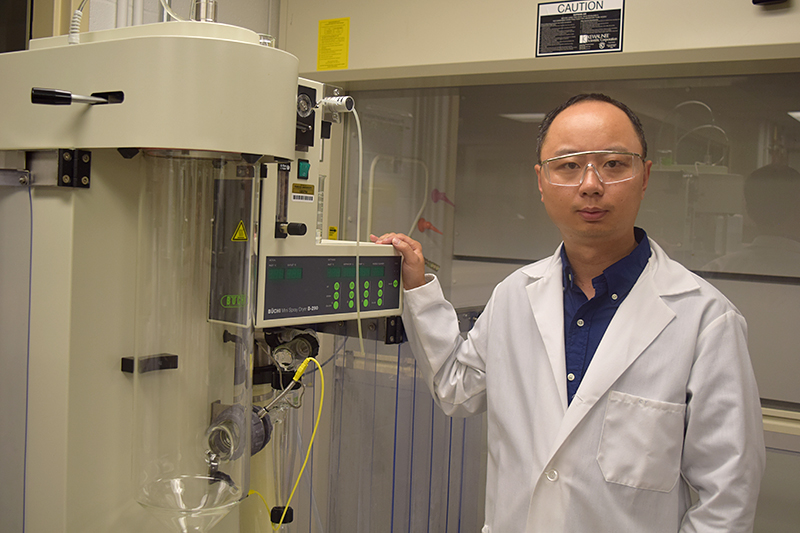
Tony Zhou, College of Pharmacy
Email: otcip@prf.org
Email: Steve Martin // sgmartin@prf.org